
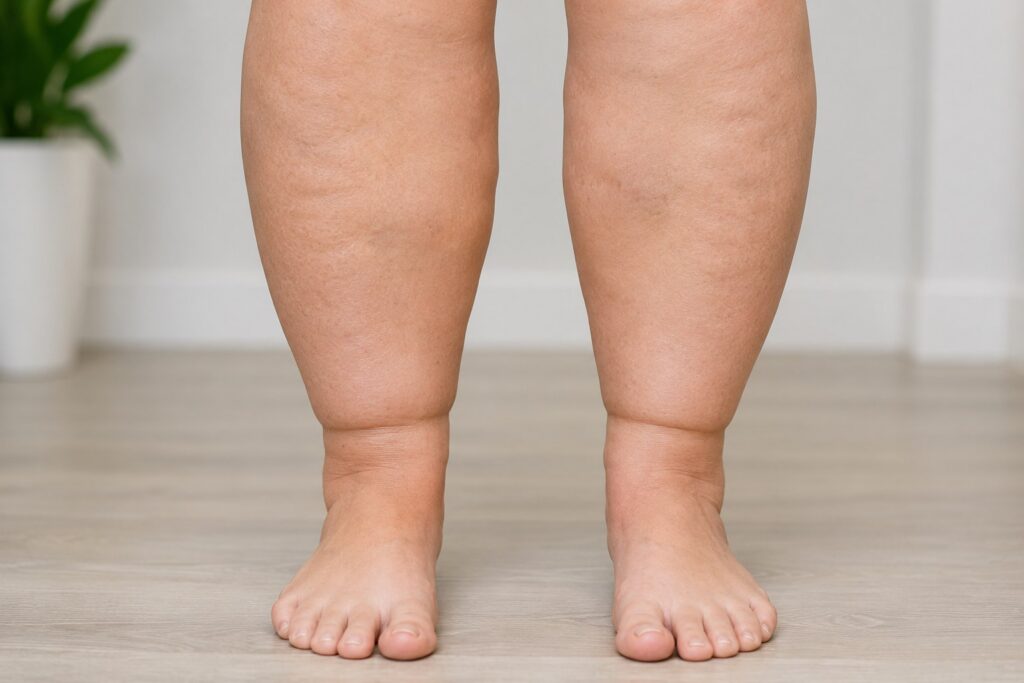
What is Lipedema?
Lipedema is a chronic disorder involving the disproportionate accumulation of abnormal fatty tissue, most commonly in the hips, thighs and lower legs. It primarily affects women and may also involve the upper arms. Unlike ordinary fat deposits, lipedema can cause pain, tenderness, heaviness, swelling and easy bruising.
The condition is frequently mistaken for obesity, cellulite or lymphedema. However, lipedema can occur at any body weight, and the affected areas may remain disproportionately enlarged even after substantial weight loss.
What Are the Symptoms of Lipedema?
Common lipedema symptoms include:
- Symmetrical enlargement of both legs
- Pain or tenderness within the fatty tissue
- Leg heaviness that worsens throughout the day
- Easy or spontaneous bruising
- Swelling and reduced exercise tolerance
- Nodular or uneven tissue beneath the skin
- Disproportion between the upper and lower body
- Relative sparing of the feet, sometimes creating an ankle “cuff”
What Causes Lipedema?
Lipedema may begin or worsen during hormonal transitions such as puberty, pregnancy or menopause. Although its exact cause remains uncertain, hormonal and genetic factors are believed to contribute. Often, patients will note that their parents or relatives have the same symptoms and have the same distribution of uneven or disproportionate abnormal fat.
How Is Lipedema Diagnosed?
Lipedema is primarily diagnosed through a detailed medical history and physical examination. There is no single blood test or imaging study that confirms the condition.
Ultrasound, MRI, venous studies or lymphatic imaging may be recommended in selected patients to evaluate the tissue, assess possible lymphatic dysfunction or exclude conditions such as venous insufficiency and lymphedema. Despite this, however, lipedema remains a clinical diagnosis which means it can be diagnosed without any imaging studies or special tests.
What Treatments Are Available?
Non-Surgical Treatments:
Conservative lipedema treatment may include compression garments, exercise, weight management, physical therapy and manual lymphatic drainage. These measures may improve swelling, mobility and discomfort but do not remove the abnormal fatty tissue. Conservative treatment may be helpful to prevent disease progression, but it may not reverse the disease itself.
Surgical Treatment:
For appropriately selected patients with persistent pain or functional impairment, lymphatic-sparing liposuction for lipedema may reduce diseased tissue (abnormal fat), improve mobility and decrease heaviness. Treatment should be individualized, and liposuction should not be presented as a guaranteed cure. Current research focuses on improving symptoms, physical function and quality of life.
Can the Surgery Be Done Awake?
For appropriate patients, lymphatic sparing tumescent liposuction surgery for lipedema may be able to be done awake. This depends on the amount of the disease burden, span of the affected areas and patient tolerability.
Patients seeking lipedema diagnosis or treatment in NYC should consult a board-certified plastic surgeon familiar with the condition.
Meet Dr. Brian Bassiri-Tehrani
Dr. Brian Bassiri-Tehrani is a double board-certified plastic surgeon with extensive training and expertise in lipedema surgery, liposuction and body contouring in NYC. He will guide you through every step of the process to ensure your safety and to optimize your results. To make an appointment, call (212) 540-6868 or click here.